
|
At Acland Street Physiotherapy, we pride ourselves on offering comprehensive 60-minute physiotherapy appointments for musculoskeletal, sports and running-related injuries.
We believe good physiotherapy takes time. Many people come to us after dealing with pain for weeks, months or even years. Others are trying to return to running, sport, gym training or an active lifestyle without repeatedly flaring up the same injury. In these situations, a rushed appointment is often not enough. A longer consultation gives us the time to properly listen, assess, explain and treat. More Time to Understand the Full Picture Pain and injury are rarely caused by just one thing. A sore knee may be related to running load, strength, footwear, hip control, training errors or previous injuries. Back pain may be influenced by work habits, sleep, stress, mobility, strength and lifestyle factors. A 60-minute appointment allows us to look beyond the painful area and understand the bigger picture. This may include:
Sports and running injuries often need more than short-term symptom relief. They need a structured plan. For runners, this may involve looking at training load, running technique, strength deficits, calf capacity, hip control, footwear, recovery and return-to-running progression. For athletes and active people, we want to understand what your body needs to tolerate — not just what hurts today. Our goal is to help you return to activity with more confidence, better understanding and a lower risk of the same issue returning. Clearer Explanations and Better Planning We know how frustrating it can be to leave an appointment unsure about what is wrong, what you should avoid, or what you are allowed to keep doing. With a longer appointment, we can take the time to explain:
You should leave with a clear plan — not just a list of exercises. A More Thorough, Less Rushed Experience Physiotherapy is not just about treating pain. It is about understanding the person, their goals and the demands of their life, work, sport or training. That is why we offer longer, more comprehensive appointments. Whether you are managing a running injury, recovering from sport, dealing with persistent pain, or simply wanting a more detailed physiotherapy assessment, our 60-minute consultations are designed to give you the time and care needed to do things properly. Book a Comprehensive Physiotherapy Appointment in St Kilda Acland Street Physiotherapy provides comprehensive musculoskeletal, sports and running injury care in St Kilda. If you are looking for a more detailed assessment, a clearer plan and a less rushed physiotherapy experience, our 60-minute appointments may be the right fit for you. Book Online
0 Comments
Why many people try physio but don’t fully recover
Most people who come to see us have already seen a physio. They’ve had massage, dry needling, and a sheet of exercises. They felt better for a few days. Then the pain returned. So they booked another appointment. And another. At some point, they start to wonder whether this is just how it is now. It usually isn’t. What’s missing is a diagnosis. Treatment without diagnosis is guesswork Massage, dry needling and shockwave therapy are tools. Used well, they are valuable. Used without a clear understanding of what is causing your pain, they are simply managing symptoms. The real work of physiotherapy is identifying the root cause of your injury, understanding why it has not improved, and mapping a clear path to recovery. Without that, you are not fixing the problem. You are temporarily suppressing it. A simple test is this: can your physio clearly explain what is wrong and why? If not, you do not have a treatment plan. You have a series of appointments. Equipment does not fix injuries. Clinical thinking does Many clinics promote shockwave therapy, laser treatment and advanced equipment. Some of these tools can help. None of them are the reason people get better. Two clinics can use the same technology and get completely different outcomes. The difference is always clinical. It comes down to reasoning, timing, progression and the ability to adapt when something is not working. Technology supports good physiotherapy. It cannot replace it. You need a plan, not just appointments Effective rehabilitation has a beginning, a middle and an end. You should know what is wrong, what you are doing about it, and roughly how long recovery will take. If you do not know these after your first appointment, ask. If you still do not get a clear answer, find someone who can give you one. Feeling better after a session is not the same as recovering. The most common reason pain keeps returning is that there is no structured progression. Hands-on treatment and exercise — both matter Manual therapy helps reduce pain and restore movement. Exercise rebuilds strength and reduces the likelihood of the problem returning. Neither works as well without the other. Clinics that rely only on passive treatment often create short-term relief but leave underlying issues unaddressed. Clinics that move too quickly to exercise without managing pain can struggle to get patients engaged early. The key is balance, and knowing when to shift from one to the other. The goal is to not need physio A good physio’s job is to make themselves redundant. You should leave with a clear understanding of your condition, the tools to manage it, and the confidence to move without fear. Not a standing appointment every two weeks with no clear endpoint. The goal is to return you to work, sport and daily life without ongoing treatment. Clarity speeds up recovery Pain is not purely physical. It is influenced by uncertainty, fear and lack of understanding. When you understand what is happening and what is safe, you move with more confidence. You follow your rehabilitation more effectively. Recovery improves. Clarity is not just reassuring. It is part of the treatment. Our approach at Acland Street Physiotherapy At Acland Street Physiotherapy, we focus on what actually drives outcomes. We start with an accurate diagnosis. From there, we build a structured, progressive plan. We combine hands-on treatment with exercise-based rehabilitation throughout recovery. We use technology when it adds value, not as a default. We treat back and neck pain, sports and running injuries, workplace and postural conditions, and chronic pain. We see many patients who have tried physiotherapy elsewhere without lasting results. Our role is to understand why, and to provide a clearer path forward. Book a physio in St Kilda If your pain keeps coming back despite treatment, there is usually a reason. Book an appointment at Acland Street Physiotherapy and start your recovery with a clear, structured plan. Early rehabilitation after an acute muscle injury can get you back to your favourite activities faster! When you strain a lower limb muscle like a calf or a thigh, it is often possible to exercise or load these muscles up in the first couple of days right after the injury. Surprisingly, muscles can handle significantly more than you think in the first few days of a muscle strain. This recent study published in the New England Journal of Medicine supports this view. In conclusion, early physiotherapy rehabilitation after an acute muscle injury (even if it is severe), can help accelerate the healing process - allowing you to get back to your favourite activities much early than delaying professional intervention. 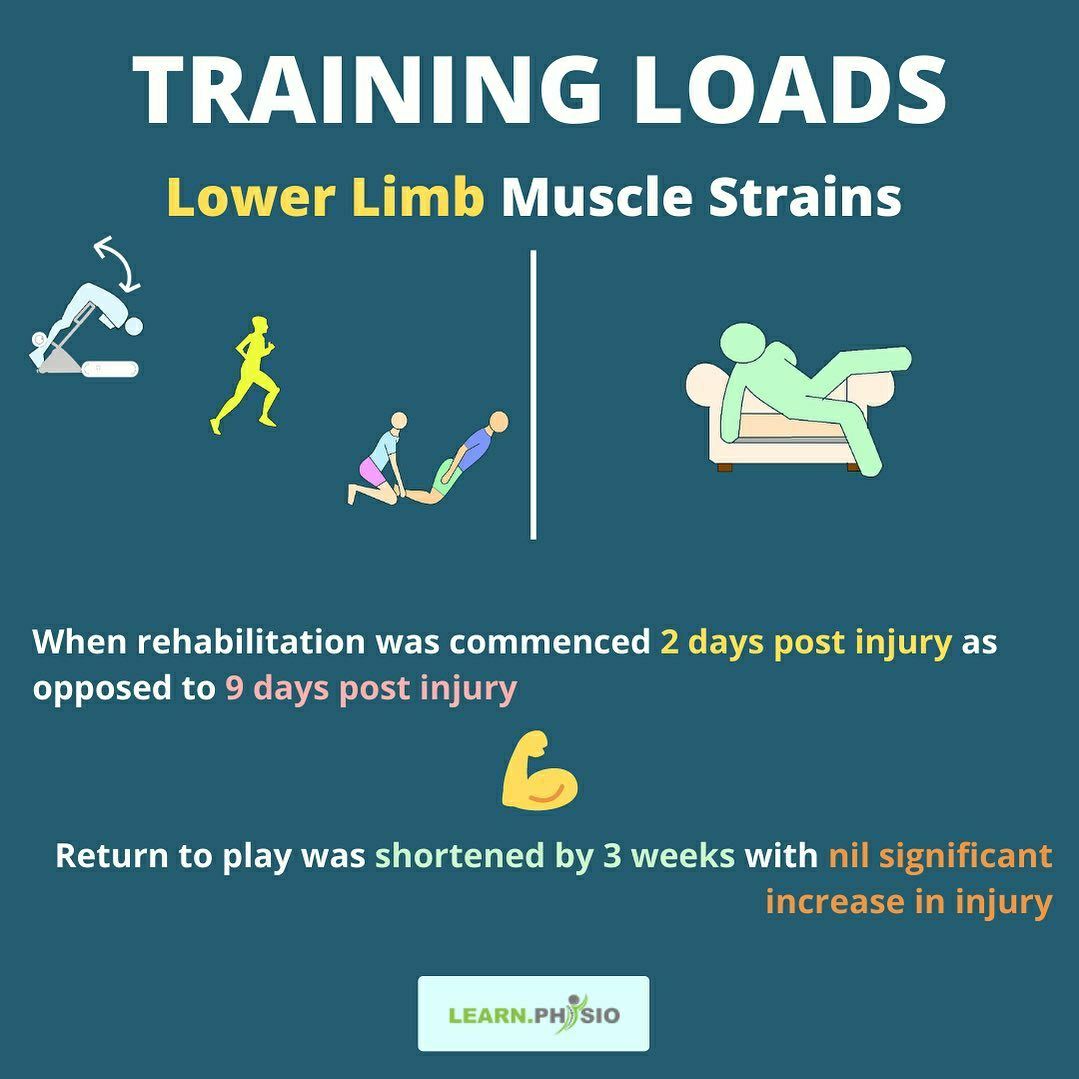 Patience and persistence are the keys to a successful physiotherapy rehabilitation program for your injury or following orthopaedic surgery. At Acland Street Physiotherapy, we try our best to set very realistic expectations of full recovery from the beginning of the physiotherapy treatment program. We have a relatively low patient drop out out rate to injury rehab programs that need to be committed to for at least 3 months. We enlighten and train our patients from the beginning of the physiotherapy treatment program that their movement or function will improve much before pain does. Realistically, pain will most probably come on for the journey but will reduce over time. Nonetheless, in some cases, pain may resolve with a rapid increase in function. It is important to understand that for some people depending on the nature of the injury, the pain will resolve completely. For most people, pain will continue on at a relatively manageable level. They will experience a little bit of a niggle or discomfort now and then and this might be the "new normal" moving forward. The key point here is that be reassured with a comprehensive injury rehabilitation program, you will with time, be able to return to doing the things you love, and your pain will be relatively less in all cases. In addition, completely resting and avoiding activities is often not the answer and can lead to poorer results in the longer term. 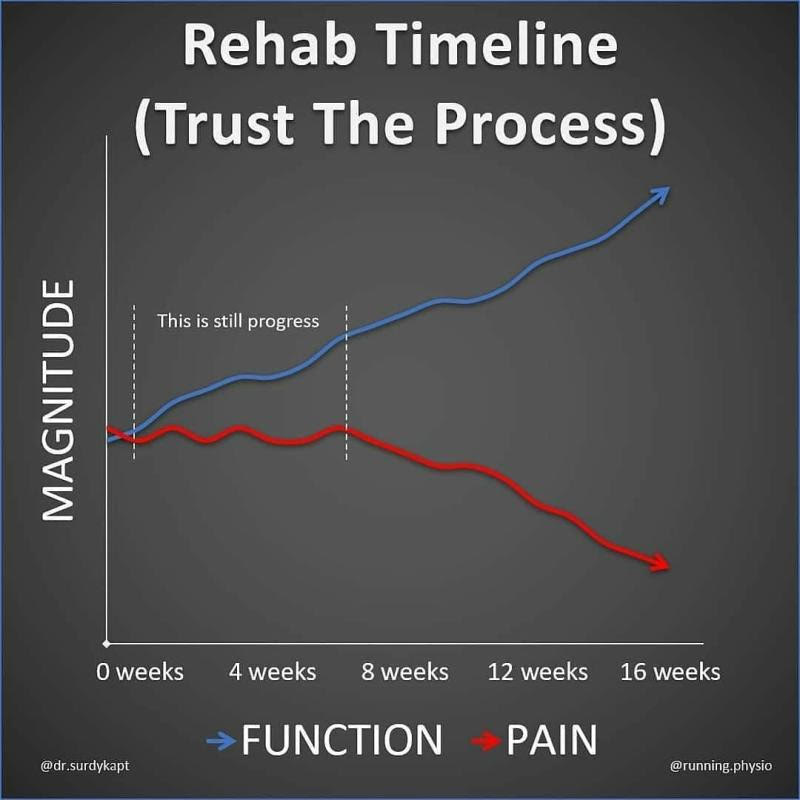 |
Author
Archives
September 2026
|
 RSS Feed